
Protein Labeling Reagents


Cayman Chemical LongchaIn CIsTrns Isomer F 5mL
A mixture of long-chain fatty acid methyl esters; contains cis and trans isomers of several fatty acids; intended for use as a reference standard for the detection of long-chain fatty acids in various sample types by GC-MS

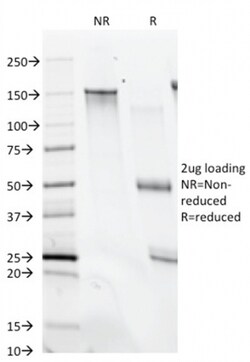
Biotium CD28(C28/74), CF488A conjugate, 0.1mg/mL
Recognizes a glycoprotein of 44-88 kDa, which is identified as CD28. It is the critical T-cell co-stimulatory receptor which provides to the cell the important second activation signal by binding CD80 and CD86 that are expressed by antigen presenting cells. Besides its co-stimulation role, CD28 functions in preventing T-cells from anergic hyporesponsive state or from undergoing premature apoptotic cell death. CD28 is also expressed on human fetal NK cells and some NK cell lines, whereas on murine NK cells the CD28 expression is much broader. Primary antibodies are available purified, or with a selection of fluorescent CF Dyes and other labels. CF Dyes offer exceptional brightness and photostability. Note: Conjugates of blue fluorescent dyes like CF405S and CF405M are not recommended for detecting low abundance targets, because blue dyes have lower fluorescence and can give higher non-specific background than other dye colors.
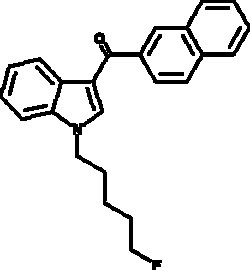
Cayman Chemical AM2201 2-naphthyl Isomer 1mg
Differs structurally from AM2201 by having the naphthyl group attached at the 2' position
Proteintech Group Inc Spot-Label ATTO594
anti-Spot-Tag VHH/ Nanobody conjugated to fluorescent dye for immunofluorescence, microscopy, and immunoblotting of Spot-tagged proteins

LICOR IRDye 680RD Alkyne Infrared Dye (0.5mg)
IRDye 680RD Alkyne provides the functionality for preferential labeling of molecules containing azide groups (–N3) with IRDye 680RD.
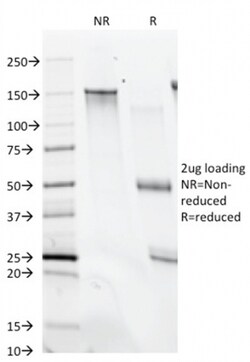
Biotium CD28(C28/74), CF568 conjugate, 0.1mg/mL
Recognizes a glycoprotein of 44-88 kDa, which is identified as CD28. It is the critical T-cell co-stimulatory receptor which provides to the cell the important second activation signal by binding CD80 and CD86 that are expressed by antigen presenting cells. Besides its co-stimulation role, CD28 functions in preventing T-cells from anergic hyporesponsive state or from undergoing premature apoptotic cell death. CD28 is also expressed on human fetal NK cells and some NK cell lines, whereas on murine NK cells the CD28 expression is much broader. Primary antibodies are available purified, or with a selection of fluorescent CF Dyes and other labels. CF Dyes offer exceptional brightness and photostability. Note: Conjugates of blue fluorescent dyes like CF405S and CF405M are not recommended for detecting low abundance targets, because blue dyes have lower fluorescence and can give higher non-specific background than other dye colors.
Medchemexpress LLC Luc Yellow CH dilithium | 67769-47-5 | 99.7% | 10 MG

Luc Yellow CH dilithium is a high-intensity fluorescent probe containing free hydrazyl groups. It can react with fatty aldehydes at room temperature and serves as a biological tracer to monitor neuronal branching, regeneration, gap junction detection and characterization, and selective ablation of cells after aldehyde fixation. Luc Yellow CH displays the maximum excitation/emission of 430 nm/540 nm, respectively.
- Fluorescent dye
- Biological tracer to monitor neuronal branching, regeneration, gap junction detection and characterization, and selective ablation of cells after aldehyde fixation
- Cell imaging/staining
- Used for Lucifer yellow CH (10 μg/mL; 12 h) staining images
- Used to evaluate GJ functionality
Biotium CD3e (T-Cell Marker)(OKT3), CF568 conjugate, 0.1mg/mL
Recognizes the epsilon-chain of CD3, which consists of five different polypeptide chains (designated as gamma, delta, epsilon, zeta, and eta) with MW ranging from 16-28 kDa. CD3, also known as T3, is a member of the immunoglobulin superfamily that plays a role in antigen recognition, signal transduction, and T cell activation. It is found on all mature T-lymphocytes, NK, T-cells, and some thymocytes, and is expressed, typically at high levels, on peripheral T cells and majority of T cell neoplasms. Thymocytes express CD3 at different level on the cell surface in the course of differentiation and CD3 is predominantly intracytoplasmic in cortical thymus.Anti-CD3 clone OKT3 has been reported to have potent immunosuppressive properties in vivo and has been proven effective in the treatment of renal, heart and liver allograft rejection. In the crystal structure of the antibody-receptor complex, clone OKT3 was found to bind a conformational epitope on CD3e dominated by a linear
![eMolecules Sulfo-Cy3-Amide-C6-Amine | Broadpharm |867.010 | C38H52N4Na2O10S3 | 97.000 | [Na+].[Na+].CC1(C)\C(=C/C=C/C2=[N+](CCCS([O-])(=O)=O)c3ccc(cc3C2(C)C)S([O-])(=O)=O)N(CCCCCC(=O)NCCCCCCN)c2ccc(cc12)S([O-])(=O)=O | 25mg | 591908340](https://assets.fishersci.com/TFS-Assets/CCG/product-images/502183637.JPG-250.jpg)
eMolecules Sulfo-Cy3-Amide-C6-Amine | Broadpharm |867.010 | C38H52N4Na2O10S3 | 97.000 | [Na+].[Na+].CC1(C)\C(=C/C=C/C2=[N+](CCCS([O-])(=O)=O)c3ccc(cc3C2(C)C)S([O-])(=O)=O)N(CCCCCC(=O)NCCCCCCN)c2ccc(cc12)S([O-])(=O)=O | 25mg | 591908340
Sulfo-Cy3-Amide-C6-Amine | Broadpharm |867.010 | C38H52N4Na2O10S3 | 97.000 | [Na+].[Na+].CC1(C)\C(=C/C=C/C2=[N+](CCCS([O-])(=O)=O)c3ccc(cc3C2(C)C)S([O-])(=O)=O)N(CCCCCC(=O)NCCCCCCN)c2ccc(cc12)S([O-])(=O)=O | 25mg | 591908340
![eMolecules 2183473-00-7 | BDP 630/650 amine | Broadpharm584.920 | C29H32BClF2N4O2S | 95.000 | Cl.NCCCCCCNC(=O)COc1ccc(\C=C\c2ccc3C=C4C=CC(c5cccs5)=[N+]4[B-](F)(F)n23)cc1 | 50mg | 374905451](https://assets.fishersci.com/TFS-Assets/CCG/product-images/502203477.JPG-250.jpg)
eMolecules 2183473-00-7 | BDP 630/650 amine | Broadpharm584.920 | C29H32BClF2N4O2S | 95.000 | Cl.NCCCCCCNC(=O)COc1ccc(\C=C\c2ccc3C=C4C=CC(c5cccs5)=[N+]4[B-](F)(F)n23)cc1 | 50mg | 374905451
BDP 630/650 amine | Broadpharm | 2183473-00-7584.920 | C29H32BClF2N4O2S | 95.000 | Cl.NCCCCCCNC(=O)COc1ccc(\C=C\c2ccc3C=C4C=CC(c5cccs5)=[N+]4[B-](F)(F)n23)cc1 | 50mg | 374905451
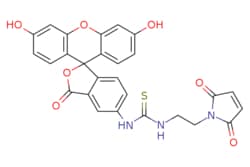
eMolecules 2228857-33-6 | Fluorescein-Maleimide | Broadpharm529.520 | C27H19N3O7S | 90.000 | Oc1ccc2c(Oc3cc(O)ccc3C22OC(=O)c3cc(NC(=S)NCCN4C(=O)C=CC4=O)ccc23)c1 | 5mg | 411414008
Fluorescein-Maleimide | Broadpharm | 2228857-33-6529.520 | C27H19N3O7S | 90.000 | Oc1ccc2c(Oc3cc(O)ccc3C22OC(=O)c3cc(NC(=S)NCCN4C(=O)C=CC4=O)ccc23)c1 | 5mg | 411414008
Biotium MDM2(MDM2/2414), CF488A conjugate, 0.1mg/mL
MDM2 is a nuclear phosphoprotein that binds and inhibits transactivation by tumor protein p53. It can promote tumor formation by targeting tumor suppressor proteins, such as p53, for proteasomal degradation. Overexpression of MDM2 can result in excessive inactivation of tumor protein p53, diminishing its tumor suppressor function. This protein also affects the cell cycle, apoptosis, and tumorigenesis through interactions with other proteins, including retinoblastoma 1 and ribosomal protein L5. Overexpression of MDM2 protein is detected in a variety of cancers. Primary antibodies are available purified, or with a selection of fluorescent CF Dyes and other labels. CF Dyes offer exceptional brightness and photostability. Note: Conjugates of blue fluorescent dyes like CF405S and CF405M are not recommended for detecting low abundance targets, because blue dyes have lower fluorescence and can give higher non-specific background than other dye colors.
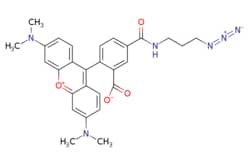
eMolecules 825651-66-9 | Medchem Express | TAMRA azide 5-isomer | 1mg | 784544163 | HY-151857 | 512.57 | C28H28N6O4
Medchem Express | TAMRA azide 5-isomer | 1mg | 784544163 | HY-151857 | 825651-66-9 | 512.570 | C28H28N6O4
NCCCCCC[NH3+])c4ccc(cc4C3(C)C)S([O-])(=O)=O)=C2)C(C)(C)c2cc(ccc12)S([O-])(=O)=O | 25mg | 272383948](https://assets.fishersci.com/TFS-Assets/CCG/product-images/502203498.JPG-250.jpg)
eMolecules 2236573-39-8 | Sulfo-Cy7 amine | Broadpharm807.080 | C43H58N4O7S2 | 96.000 | CN1\C(=C\C=C2/CCCC(\C=C\C3=[N+](CCCCCC(=O)NCCCCCC[NH3+])c4ccc(cc4C3(C)C)S([O-])(=O)=O)=C2)C(C)(C)c2cc(ccc12)S([O-])(=O)=O | 25mg | 272383948
Sulfo-Cy7 amine | Broadpharm | 2236573-39-8807.080 | C43H58N4O7S2 | 96.000 | CN1\C(=C\C=C2/CCCC(\C=C\C3=[N+](CCCCCC(=O)NCCCCCC[NH3+])c4ccc(cc4C3(C)C)S([O-])(=O)=O)=C2)C(C)(C)c2cc(ccc12)S([O-])(=O)=O | 25mg | 272383948